 Monsoon Fire
Example: small batch
3 plates, 2 mugs, 1 small bowl.
Usually one half shelf when every piece is 10 inches tall or less. Bisque plates and bowls may stack safely; glazed work stays separate.
Start with a useful estimate
Compare your pieces with the shelf examples to estimate whether they’ll fit on one half shelf. This page is for planning only—nothing is billed here. We confirm the space used and final price after firing.
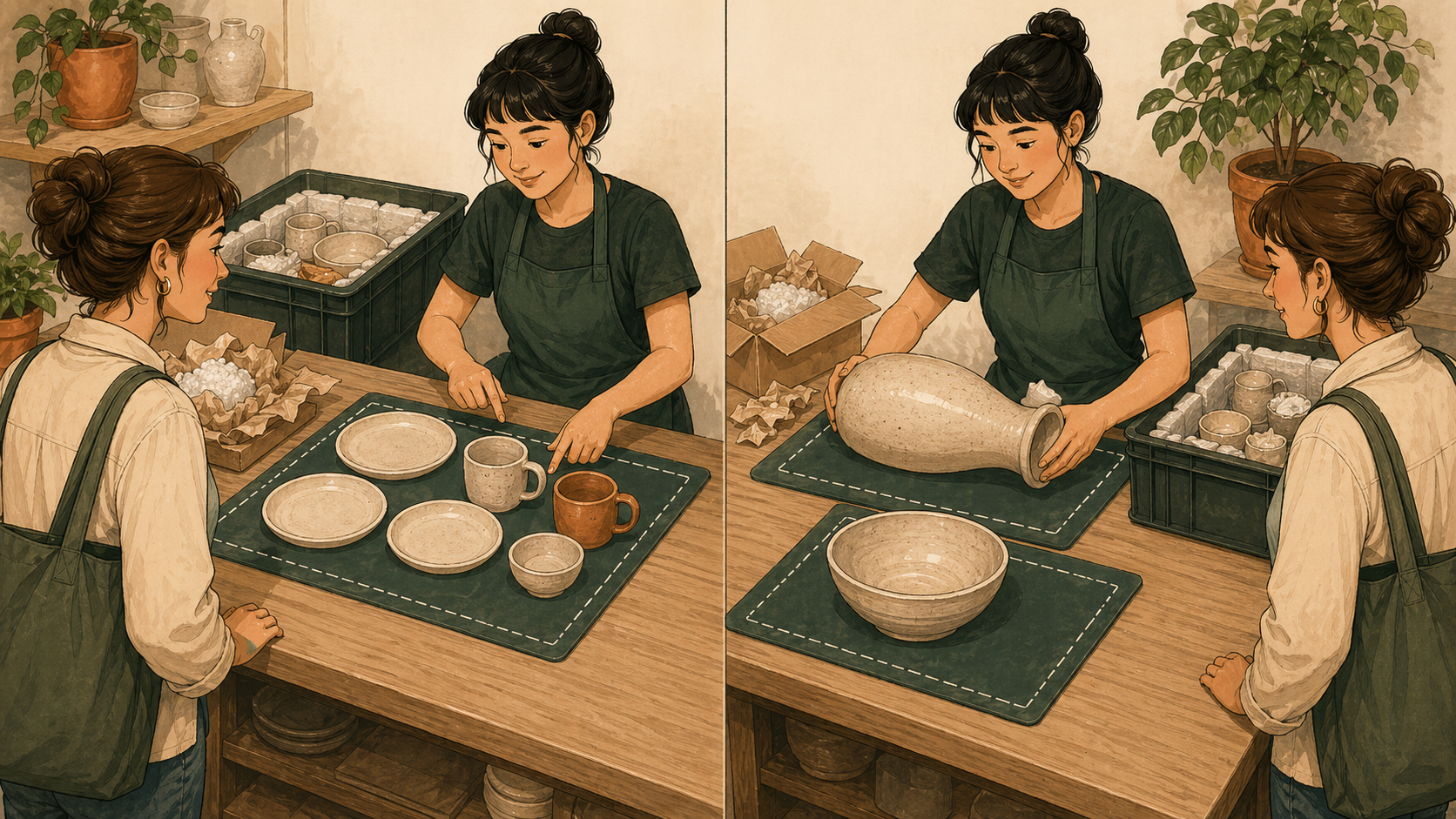
Example: small batch
Usually one half shelf when every piece is 10 inches tall or less. Bisque plates and bowls may stack safely; glazed work stays separate.
Example: wide or tall pieces
If the group crosses the curved edge of one half-shelf guide, or anything is over 10 inches tall, start with two half shelves.
The whole handoff
The planner gathers the studio details, then sends the instructions you need for dropoff and pickup.
Share the firing range and closest shelf estimate. We’ll email the ticket and dropoff instructions to you and the studio.
Bring work that is safe to travel. You can leave a standard firing without needing a studio conversation.
We fire carefully, confirm the final charge after the firing, and email when the work is ready for pickup.
Choose your next step
The planner covers firing range, shelf space, and dropoff details. Quick answers goes straight to the studio FAQ.